PMS vs PMDD Understanding the Difference and How TCM Can Help

A difficult premenstrual week is common. A premenstrual week that feels frightening, unmanageable, or life-altering is something else.
Premenstrual Syndrome, better known as PMS, and Premenstrual Dysphoric Disorder, or PMDD, both occur in the luteal phase of the menstrual cycle. This is the phase after ovulation and before bleeding begins. Because they share timing and some symptoms, they are often spoken about as if they are the same thing.
They are not.
PMS can bring bloating, breast tenderness, irritability, mood changes, fatigue, food cravings, and sleep changes. PMDD is more severe. It can involve intense depression, anxiety, anger, emotional sensitivity, and a sense of being unable to function as usual. For some people, PMDD affects work, study, relationships, parenting, and safety.
Traditional Chinese Medicine, or TCM, looks at both conditions through a different lens. Rather than focusing only on hormones, it considers the whole pattern: mood, digestion, sleep, pain, bleeding, stress, temperature, energy, and constitution. Treatment may include acupuncture, Chinese herbal medicine, diet and lifestyle advice, and cycle tracking.
This article is for general information only and is not a substitute for medical advice, diagnosis, or treatment. If premenstrual symptoms include thoughts of self-harm, seek urgent help. In Australia, call 000 in an emergency or contact Lifeline on 13 11 14.

PMS and PMDD occur in the same part of the cycle
The menstrual cycle is often described in phases:
Menstruation
Follicular phase
Ovulation
Luteal phase
PMS and PMDD happen during the luteal phase. Symptoms usually appear after ovulation and improve within a few days after bleeding starts. This cyclical timing matters. It helps separate PMS and PMDD from other conditions that may be present throughout the month, such as generalised anxiety, major depression, thyroid issues, anaemia, endometriosis, or chronic fatigue.
Hormones are part of the picture, but the story is not as simple as “too much” or “too little” of one hormone. Many people with PMDD have hormone levels that fall within a typical range. The issue may be how the brain and nervous system respond to normal hormonal shifts, especially changes involving progesterone, oestrogen, and neurotransmitters such as serotonin.
That is why PMDD is not a personality flaw, overreaction, or lack of resilience. It is a recognised, debilitating medical condition.
PMS is also real, but it tends to be milder and more manageable. A person with PMS may feel irritable, tender, tired, or bloated. They may need more rest or feel less patient than usual. A person with PMDD may dread the luteal phase because symptoms can feel extreme, sudden, and out of character.
The key difference is not just the presence of symptoms. It is severity, predictability, and impact on daily life.
How PMS and PMDD are different
PMS and PMDD sit on the same broad premenstrual spectrum, but PMDD has a sharper clinical definition.
With PMS, symptoms can be physical, emotional, or both. Common signs include:
Breast tenderness
Bloating or fluid retention
Headaches
Acne flare-ups
Food cravings
Fatigue
Irritability
Mild anxiety or low mood
Sleep changes
Cramping or body aches
These symptoms can be unpleasant, but they usually do not cause major impairment. Many people can still work, care for others, exercise, socialise, and make decisions, even if they feel uncomfortable.
PMDD involves more severe mood and nervous system symptoms. These may include:
Marked depression or hopelessness
Intense anxiety, panic, or feeling on edge
Sudden anger or conflict that feels hard to control
Tearfulness or rejection sensitivity
Feeling overwhelmed by ordinary tasks
Loss of interest in usual activities
Difficulty concentrating
Severe fatigue or sleep disruption
Physical symptoms such as bloating, pain, breast tenderness, or headaches
The symptoms of PMDD usually ease after menstruation begins, then return after ovulation in the next cycle. This repeated pattern can create anticipatory stress. A person may feel well for part of the month, then begin to fear the next shift.
A simple way to compare the two is this:
PMS | PMDD |
Symptoms are often uncomfortable | Symptoms are often severe and disabling |
Mood changes may be mild to moderate | Mood symptoms can be intense and distressing |
Daily life is usually still manageable | Work, relationships, study, and safety may be affected |
Physical symptoms may be prominent | Emotional and psychological symptoms are often central |
Supportive care may be enough | Medical assessment and a broader care plan are often needed |
Diagnosis of PMDD usually involves tracking symptoms across at least two cycles. This helps confirm that symptoms are tied to the luteal phase and improve after bleeding begins.

How TCM understands premenstrual symptoms
Traditional Chinese Medicine uses its own language and diagnostic system. It does not diagnose PMS or PMDD in the same way Western medicine does. Instead, it looks for patterns of disharmony in the body’s qi, blood, yin, yang, and organ systems.
In TCM, the menstrual cycle reflects the movement and balance of the whole body. Emotional wellbeing, digestion, sleep, stress, pain, and circulation are all considered relevant.
One common TCM idea is that premenstrual symptoms often involve Liver qi stagnation. In TCM theory, the Liver helps maintain the smooth movement of qi. When qi becomes constrained, symptoms may appear before the period, such as irritability, breast tenderness, mood swings, bloating, sighing, headaches, or a feeling of pressure.
This does not mean there is something structurally wrong with the liver as understood in Western medicine. TCM terms describe functional patterns, not necessarily organ disease.
Other patterns may also be involved.
Liver qi stagnation
This pattern is often linked with stress sensitivity, emotional tension, breast distension, headaches, and a sense of being “stuck”. Symptoms may worsen when life is demanding or rest is limited.
Treatment principles may focus on moving qi, easing constraint, and supporting emotional regulation.
Liver fire or heat
When irritability becomes more intense, with anger, agitation, insomnia, headaches, red eyes, thirst, or a feeling of heat, a TCM practitioner may consider a heat pattern.
Treatment may focus on clearing heat and calming the system.
Blood deficiency
If symptoms include fatigue, dizziness, pale complexion, poor sleep, anxiety, light periods, or feeling emotionally fragile, a practitioner may assess for blood deficiency.
Treatment may aim to nourish blood and support recovery, especially after heavy periods, poor diet, overwork, or long-term depletion.
Spleen qi deficiency
In TCM, the Spleen is linked with digestion and the production of qi and blood. Bloating, loose stools, fluid retention, cravings, fatigue, and heavy limbs may point to this pattern.
Treatment may focus on strengthening digestion and reducing dampness.
Kidney yin or yang deficiency
Some people have deeper patterns involving temperature regulation, night sweats, coldness, low back ache, exhaustion, low libido, or cycle irregularity. TCM may describe this through Kidney yin or Kidney yang deficiency.
Treatment here is usually more gradual and constitution-focused.
These patterns can overlap. Two people with the same PMS or PMDD label may receive different TCM treatments because their whole presentation differs.

How acupuncture may support PMS and PMDD care
Acupuncture involves inserting very fine needles into specific points on the body. From a TCM perspective, the aim is to regulate qi and blood, calm the mind, reduce pain, and support the body’s natural rhythm through the cycle.
From a biomedical perspective, research suggests acupuncture may influence the nervous system, pain pathways, stress response, inflammation, and neurotransmitter activity. Evidence for PMS is more developed than for PMDD, though research in this area continues. Results vary, and acupuncture should not replace medical care for severe mood symptoms.
For PMS, acupuncture may be used to support:
Pelvic pain or cramping
Headaches
Breast tenderness
Bloating
Sleep quality
Stress-related tension
Mood swings
For PMDD, acupuncture is best viewed as part of a wider care plan. That plan may also involve a GP, psychologist, psychiatrist, gynaecologist, dietitian, or other health professional. Some people benefit from medication, such as SSRIs or hormonal treatments, and these can be life-changing. TCM does not need to compete with that care. It can sit alongside it when managed safely.
A common TCM treatment plan changes across the cycle. For example, a practitioner may focus on building qi and blood after bleeding, supporting ovulation mid-cycle, moving qi in the luteal phase, and easing pain during the period. The exact plan depends on the individual.
Consistency matters. One session may help someone feel calmer or sleep better, but cycle-related patterns often need several months of care to assess change.
How Chinese herbs are used
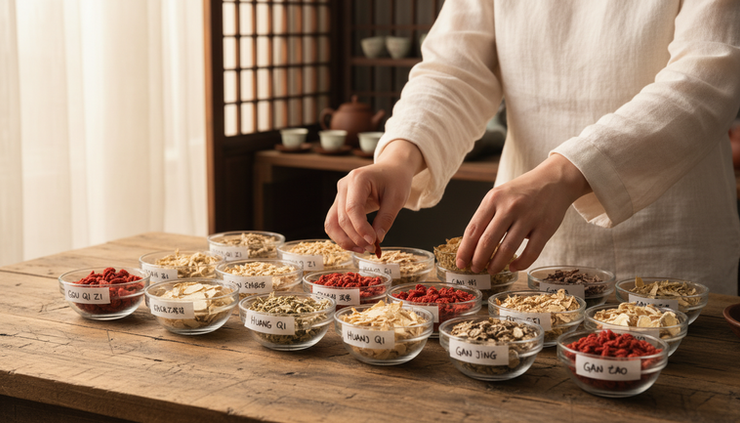
Chinese herbal medicine is highly individualised. A practitioner may prescribe a formula rather than a single herb, then adjust it as symptoms shift across the cycle.
For premenstrual mood changes, a well-known classical formula often discussed in TCM is Xiao Yao San, sometimes translated as Free and Easy Wanderer. It is traditionally used for patterns involving Liver qi stagnation with blood deficiency and digestive weakness. Variations may be used when heat, pain, or more pronounced deficiency is present.
This does not mean Xiao Yao San is suitable for everyone with PMS or PMDD. Herbal medicine depends on pattern diagnosis, constitution, medications, pregnancy status, allergies, and other health conditions.
Herbs can interact with medicines, including antidepressants, blood thinners, hormonal treatments, and drugs processed by the liver. Quality also matters. In Australia, it is best to see a qualified practitioner who uses reputable products and asks about your medical history.
Chinese herbs may be used to support:
Emotional tension before the period
Breast tenderness and bloating
Digestive symptoms
Fatigue or depletion
Sleep disruption
Menstrual pain
Cycle irregularity
For PMDD, herbs should be used with extra care. Severe depression, rage, panic, or suicidal thoughts need medical support. A good TCM practitioner will recognise when collaborative care is needed.
Practical steps that help clarify the pattern
Whether someone chooses Western medicine, TCM, or both, tracking is one of the most useful first steps. PMDD in particular needs a clear pattern over time.
A simple tracker can include:
Cycle day
Bleeding days
Mood rating
Anxiety or irritability level
Sleep quality
Energy
Pain
Bloating
Food cravings
Major stressors
Medication, herbs, or supplements
Exercise and alcohol intake
The goal is not perfection. The goal is to see whether symptoms reliably appear after ovulation and ease after menstruation starts.
Lifestyle changes may also reduce the load on the nervous system. They are not a cure-all, and they should not be used to dismiss severe symptoms, but they can help create a steadier baseline.
Helpful supports may include:
Regular meals with enough protein
Reducing alcohol, especially in the luteal phase
Gentle movement such as walking, yoga, or swimming
Strength training if energy allows
Earlier nights in the premenstrual week
Lowering caffeine if anxiety or breast tenderness worsens
Planning fewer high-stress commitments before the period
Asking trusted people for support during the hardest days
From a TCM point of view, cold, raw foods may worsen bloating or loose stools in some people, while very spicy foods and alcohol may aggravate heat signs. A practitioner may suggest warm cooked meals, ginger or cinnamon only where appropriate, steady meal timing, and fewer stimulants.
The most useful care plan is one that respects the severity of the symptoms. Mild PMS may respond well to lifestyle support, acupuncture, and herbs. PMDD often needs a stronger safety net, including formal diagnosis and mental health care.
When to seek medical help
Seek medical advice if premenstrual symptoms are severe, worsening, or affecting daily life.
It is especially important to speak with a GP or mental health professional if symptoms include:
Thoughts of self-harm or suicide
Feeling unsafe around yourself or others
Panic attacks
Severe depression or hopelessness
Rage that feels out of control
Relationship or work breakdown linked to the cycle
Symptoms that continue all month
Heavy bleeding, severe pain, or fainting
New symptoms after starting medication or contraception
PMDD is treatable, but people often spend years being told their symptoms are “just PMS”. Clear tracking, good medical support, and respectful care can change that.
TCM can offer a valuable whole-person framework. It pays close attention to the rhythm of the cycle, the stress response, digestion, sleep, pain, and emotional patterns. Acupuncture and herbs may help some people feel more regulated and supported. The safest approach is integrated care, especially when symptoms are severe.

The takeaway
PMS and PMDD both occur in the luteal phase, but they are not the same condition. PMS is usually uncomfortable and manageable. PMDD is severe, cyclical, and can be disabling.
TCM views premenstrual symptoms as signs of systemic disharmony, often involving qi stagnation, blood deficiency, digestive weakness, heat, or deeper constitutional patterns. Acupuncture and Chinese herbs may support balance, reduce symptom burden, and help the body move through the cycle with less strain.
The next step is simple but powerful: track symptoms for two cycles. If the pattern is severe, seek medical advice. If you choose TCM, work with a qualified practitioner who understands both menstrual health and the need for collaborative care. Better support starts with taking the pattern seriously.


Comments